My WordPress Page
On this server, WordPress is deployed using Docker Compose, running alongside a dedicated MariaDB database container. Both services are configured with host networking, allowing for direct, high-speed communication while maintaining strong isolation from the public network. The WordPress application is never exposed directly to the internet; instead, all external access is funneled through a secure Nginx reverse proxy, which handles HTTPS termination, routing, and additional security layers.
Configuration is managed primarily through environment variables, ensuring that sensitive information such as database credentials and custom WordPress constants remain secure and easily maintainable. The site’s URLs are strictly set to <macarare.com>, enforcing consistency and secure access across all endpoints. JWT authentication is enabled, supporting robust API integrations and modern authentication workflows.
To ensure the application operates correctly behind the reverse proxy, the system is aware of forwarded headers like X-Forwarded-Host and X-Forwarded-Proto, allowing WordPress to accurately detect the original request protocol and host, which is essential for proper URL generation and HTTPS enforcement.
Performance and usability are further enhanced by custom PHP settings, which allow for large file uploads (up to 256MB) and increased memory and execution time limits. This makes the site suitable for demanding workflows, such as media-heavy content or complex plugin operations.
Overall, this setup combines the flexibility and power of Docker with best practices in WordPress security, performance, and maintainability, resulting in a robust, scalable, and secure environment for running a modern WordPress site.
Skills Developed
Docker Compose Orchestration
Managing multi-container WordPress stacks with persistent data and secure networking.
Reverse Proxy Integration
Advanced configuration for running WordPress securely behind Nginx.
Performance Tuning
Optimizing PHP and WordPress for high upload limits and resource-intensive tasks.
Security Best Practices
Automated certificate renewal and safe deployment workflows.
Custom WordPress Development
Experience with must-use plugins and advanced configuration for custom site needs.
Deployed Services
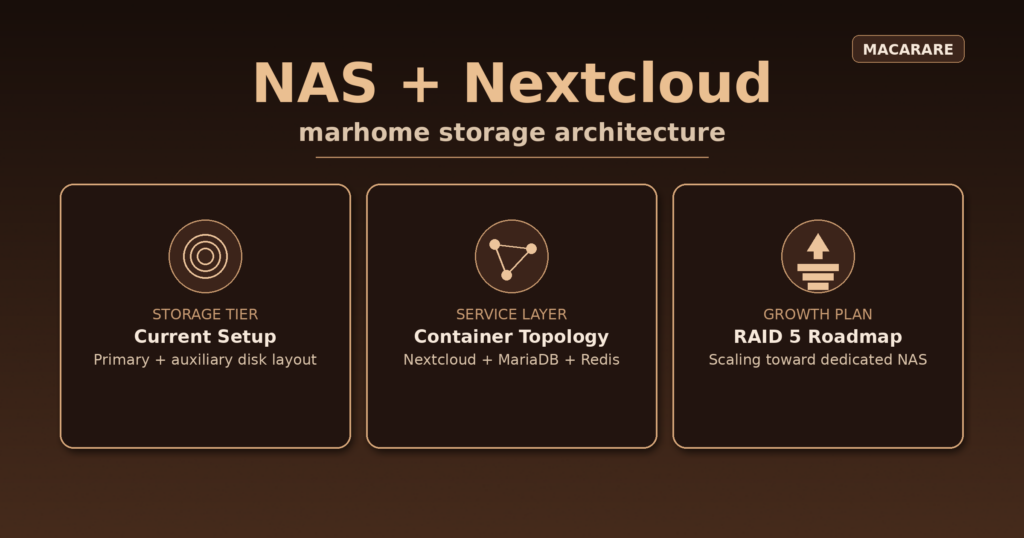
NAS (NextCloud)
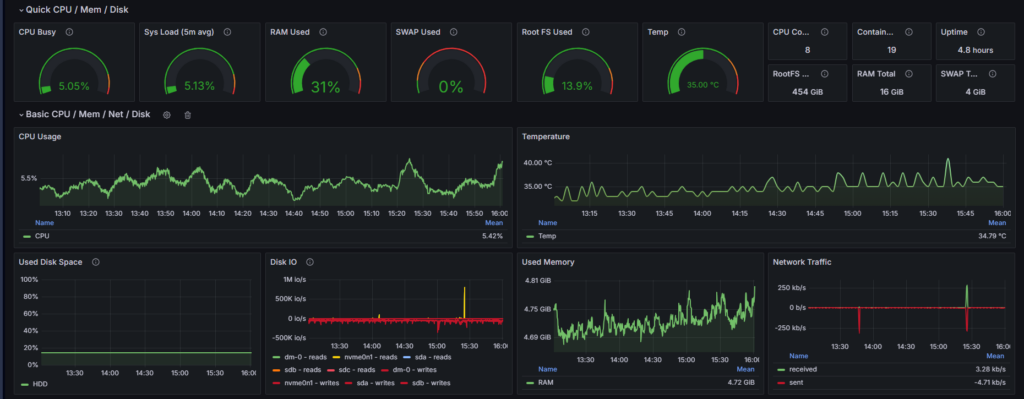
Monitoring
WordPress
NGINX